Recently I made a disapproving post on social media about a local Labour councillor, and one friend responded that ‘the infighting isn’t getting us anywhere’.
I explained that I haven’t been a member of the Labour party for a while now, so it’s not really infighting. But I also made a lengthy response about the big difference between my response to left criticism of Labour now and in the past. Here’s my response.
“Up to about 5 years ago, I used to have similar feelings to what you’ve expressed here. I’d think ‘why are so many on the left always criticising various people in Labour?’, and I’d think ‘surely the Tories are so much worse; isn’t it better to support Labour politicians even if they’re not perfect’? Since then, my opinion has changed a lot, and it’s because I get my news from a more varied/more specialised sources; I pay attention to left commentators/analysts a lot more; a pay attentions to Labour MP’s voting records and general record in post a lot more; and I’ve seen what goes in inside the Labour party from the perpective of an active member, CLP Secretary, and campaign manager. For example, I remember having a conversation with two party members about Stella Creasy MP shortly before this change happened. They were stunned that I thought she was a good MP – but the only things I’d ever seen her do was speak out about payday loans and stand up for women in parliament against abuse, so I thought she was one of the good ones.
Later I saw how she was silent on the misogynistic and racist abuse suffered by Diane Abbott and other female politicians on the left. I learned that she (like Chukka Umunna) seemed to think that Momentum had no right to exist. The way I see it, she doesn’t have to agree with or be a big fan of Momentum, but to want to bring down a huge grassroots movement with many thousands of members that attracted young people into politics in a way that had not happened in decades? I found that troubling and realised that she wasn’t what I had assumed she was earlier on. She had talked of the importance of ‘people power’, but this response to Momentum’s popularity meant she had a very different idea to me of what that involved. I also learned that she had voted against an inquiry into the Iraq war, that she was pro-Trident and had voted in favour of mass surveillance of communications and the retention of that data; all things I disagree with.
The party is a broad church, and different views will be held, but what I’m getting at is that it’s easy to have quite inaccurate and partial views about politicians when you only catch the odd thing in the Guardian or have only seen the parts the party pushes forward in its own publicity. The press Creasy got over payday loans painted her as a defiant warrior speaking up where others wouldn’t dare, but I was beginning to see that she was only a radical defender of the oppressed on a few occasions, and this is why I think the full picture and the track record of individual politicians is all to often ignored – and it’s important because they have so much influence in shaping the party and the parliament or council that they are a part of. But when people point out the less obvious, less flattering actions of an MP or Cllr, when they bring the background stuff to light, some will say it’s infighting and it’s troublesome and it should stop.
The thing that sealed it for me with Creasy was when she responded to press enquiries about her spending social time with a Tory MP (Therese Coffey) not by providing a simple explanation, but going on the attack, making claims the question was an attempt to ‘control women in the Labour party’, saying they were trying to police what music she listens to and so on. She talked about ‘victim-blaming’ as well. To me it’s really not acceptable to claim gender discrimination in cases where it’s blatantly not relevant. Her tone was petulant in my view and it really changed my opinion of her.
She also tweeted a picture of herself posing with Matt Hancock at another social event in defiance of the initial challenge. This was in 2017, when the Tories were really showing their true colours and the truth about the effects of austerity were out there, so it was pretty distasteful of her, imo. Which leads me onto Creasy’s reaction to Aditya Chakrabortty on Question Time. He pointed out (whilst arguing with an insufferably arrogant Tory cllr in the audience) that the Tories were leaving disabled people to die with their horrific cuts; Creasy didn’t jump to his defence, instead she pulled a face which made it clear that she thought his comment was ridiculous. We all know now that Charkrabortty’s claim was true, but at the time the facts were only just starting to come to light. I find it really sad that she’s the sort who will discount a left voice in a kneejerk way without knowing the facts – especially on such an important issue.
It has been a sort of personal journey for me, moving away from relying too much on the Guardian, and seeking out what was actually said by whom, seeing if there’s a wider context, and so on. What I’m trying to illustrate is that a few years ago I thought it was odd that some on the left were so critical of certain Labour candidates because I was getting access to the positive press only. I didn’t realise that certain candidates can get a good name by being seen to be fighting the good fight and saying the right things (because the party publicises them), but the less savoury bits don’t get seen unless you read Labourlist, follow left wing media, have a long memory and do a bit of fact-checking.
Also, I didn’t realise that there are some MPs who fight the good fight every day – and not just on the easy and popular fights – but their work is not publicised by the party at all, because the party machine is relentlessly factional and prefers to promote the more right-wing MPs. In short – we should know the good, less good and bad about our political representatives so we can make our own minds up. Labour’s grassroots tend to hold left-wing views, and in certain localities the left outnumber the centrists (the right within Labour); so in a lot of cases ambitious types can cultivate a left-appearing persona in order to gain support from that left-minded base. Understanding where an MP stands politically is not impossible to fathom, but it can take a bit of work and background checking. So if you hear someone criticising a Labour MP or councillor, the best thing to do is go away and look into it. Satisfy yourself as to whether or not it’s an accurate and fair criticism. It’s a better response than worrying about infighting, because if it’s correct, you’re better informed; and if it’s wrong you can counter it.”
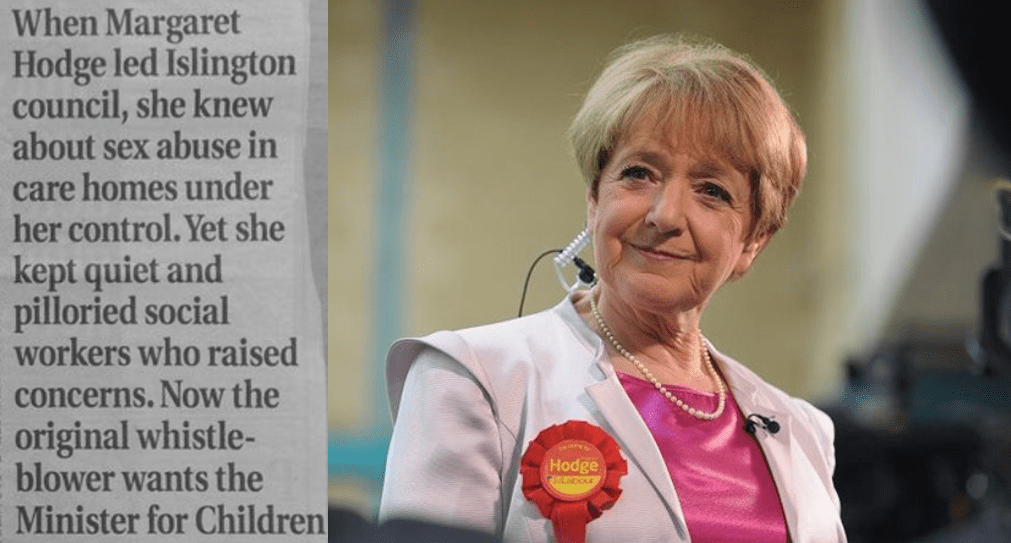
To give two more examples, I also made the mistake of thinking that Margaret Hodge was a principled crusader because of her criticism of Google’s tax affairs when chairing the Public Accounts Committee. How wrong could I be? And the same for Tom Watson – his questioning of Rupert and James Murdoch on the phone hacking select committee gave me the impression that he was fearless in speaking truth to power and a champion for fairness in politics. Now I realise that it was a perfect vehicle for raising his profile in a way that would benefit him and the party; and that more authentic, principled left wing voices don’t get those roles, or don’t get the media spotlight on it if they do. Watson is now widely regarded as a man who was intent on destroying Corbyn and Corbyn’s Labour, wrecking 2019’s election chances. If these allegation are true, he couldn’t be more of an enemy to bringing about a just and equal society. The list of shocking actions, hostile attacks on those within the party and blunders from Watson and Hodge are too many to list, but I’ll end this post with a short list of them for anyone who wants to look into it.
Margaret Hodge:
- Not acting on warnings of child sex abuse in Islington care homes; vilifying the victims and whistleblowers instead.
- Profiting via her family firm (Stemcor) from conditions in apartheid South Africa (1970s-thru to 1990s).
- Criticising Google’s tax affairs as Chair of the Public Accounts committee (2013) saying ‘You do evil’, whilst using the same set-up for transfer of her own shares in the family’s steel company.
- Undermining the Labour party continuously from 2015-2019, saying “I am not going to give up until Corbyn ceases to be leader of the Labour Party.”
- In 2007, Hodge made a crass attempt to win back those who had deserted Labour by advocating a local housing policy which privileged “the legitimate sense of entitlement felt by indigenous families” over the needs of “new migrants.”
- Submitting 200 complaints of alleged antisemitism by Labour members to the party. The 200 cases represented 111 individuals, but 91 of them were not Labour party members.
Tom Watson:
The main issues with Watson
- Stoking division by stating that new members were either ‘trots’ or being manipulated by ‘trots’ who had ‘infiltrated’ the party – offending and alienating many. He commented on Momentum: ‘they look like a bit of a rabble to me’. Comments from the top of the party like this helped to create fear of the left and resurrect old myths about an authoritarian left and creeping left wing extremism.
- Opposed all inquiries into the Iraq war (which he voted for).
- Exceptionally divisive behaviour casting the party in a bad light repeatedly; for example the public claim about ‘a document’ supposedly from Momentum recommending the use of obstructive and underhand methods at party meetings. Publicly accusing Jennie Formby of wrongdoing (failing to do take steps on antisemitism) whilst she was undergoing chemo and unable to defend herself – the allegations were denied and have not been proved correct. Watson seemed to be constantly throwing bombs during 2018 and 2019 that helped cement and the right wing media narrative that Corbyn’s Labour was divided, shambolic and confused on Brexi – making it front page news over and over again. Party members working toward election victory were maddened by Watson’s frequent media interventions, and many began to suspect sabotage and possible collusion with the defecting TIG group. Tom appeared to be repeatedly manouevring against Jeremy Corbyn. It’s worth noting that he is also seen by many as the reason for Ed Miliband’s downfall – he was also Deputy Leader under Miliband.
- Watson’s part in the Carl Beech affair (the man who provided false testimony of a VIP paedophile ring in Westminster).
- In 2015, Watson said that any Labour members who joined an anti-war protest outside the office of the Labour MP Stella Creasy should be thrown out of the party.
- Trying to stop mandatory reselection of MPs, despite many members being in favour. Reselection means that MPs must be picked again in a democratic vote by party members at each general election (similar to what happens in US primaries).
- It was alleged in the ‘Labour Leaks’ report that party funds were channelled away from key marginal seats to Watson’s relatively safe seat in 2017.
- Watson wanted to take the power to elect the leader away from the members, and have an electoral college system which would give much more say to MPs than individual members.
- Accepted two large donations from Max Mosley amounting to half a million pounds. Such large donations from a man like Mosley do seem suspect and a potential conflict of interest, as the Times pointed out “Mr Mosley’s donations may be seen as controversial because before he moved back to London in 2010 he lived in Monaco, where British residents pay no income tax. Under Mr Corbyn’s leadership the Labour Party has called on wealthy individuals to pay more and criticised the ‘scourge’ of tax avoidance.“

 In Whose Interests?